
Innovative Approaches to Terrace Lighting Deployment Amidst Pet Behavior Dynamics
In the realm of modern architecture and smart home integration, terrace lighting systems equipped with motion sensors have become pivotal for enhancing security and aesthetic appeal. However, the challenge persists: how to design sensor-based illumination that intelligently circumvents unwarranted activation caused by household pets, especially in 2026 where technological advancements demand nuanced solutions.
Understanding the Behavioral Algorithms of Domestic Animals and Sensor Sensitivity Calibration
At the intersection of behavioral science and photonic sensor technology, recognizing pet movement patterns informs the calibration of motion detectors. Employing machine learning algorithms that analyze pet activity signatures, we can fine-tune sensor parameters—such as detection zones and time delays—to reduce false triggers. Such adaptations rely on integrating AI-driven models that learn from household-specific pet behaviors, aligning with insights detailed in contemporary energy and building research publications.
Sensor Placement and Light Design: Maximizing Effectiveness While Preserving Comfort
Strategic sensor positioning emerges as a cornerstone for optimizing detection accuracy. Mounting sensors at specific angles or deploying multiple units in concert can minimize pet interference. Concurrently, selecting fixtures like modern visilice and viseće svjetiljke that direct light precisely onto human movement zones further enhances safety without disturbing pets.
Balancing Human-Centric and Pet-Friendly Lighting: Technological Considerations
Implementing Rasvjeta usmjerena na čovjeka (human-directed lighting) involves sensor systems that adapt based on occupancy and activity. Integrating organic forms such as modulable organski oblici with advanced light control ensures a harmonious environment that respects pet behaviors. Additionally, components like pribor i rezervni dijelovi play a significant role in maintaining system reliability and customization.
Addressing Technical Challenges in 2026’s Evolving Landscape
As lighting technology advances rapidly, issues such as false positives due to pet activity necessitate ongoing system evaluations. The integration of transformatori for stabilizing power supply and kristalni lusteri with adaptive sensors exemplify solutions capable of meeting high precision and energy efficiency standards.
Can AI-Enhanced Sensor Algorithms Achieve Zero False Activations from Pets in 2026?
Achieving absolute discrimination between human and pet movement remains a subject of advanced research and development. While current AI models significantly reduce false triggers, real-world deployment demands ongoing refinement. Continuous feedback loops and user data collection are essential to improve system accuracy and user trust.
For those seeking to elevate their terrace lighting systems, exploring sophisticated designs such as kombinovanje zidnih i podnih lampi may provide additional layers of ambiance and functionality. To contribute expert insights, consider engaging with professional forums and sharing field-tested strategies.
Innovative Solutions for Pet-Resistant Exterior Illumination
Recent advancements in smart lighting systems have paved the way for designs that seamlessly blend security, ambiance, and pet safety. In 2026, the focus shifts toward integrating voice-activated controls, AI-powered motion sensors, and adaptive lighting fixtures that respond intelligently to household dynamics. By employing LED fixtures with outdoor LED technology capable of dynamic adjustment, homeowners can create an environment that minimizes false triggers caused by pets while maintaining effective illumination for humans.
The Role of Machine Learning in Differentiating Pet and Human Movement
At the crux of cutting-edge pet-friendly lighting systems lies the sophisticated application of machine learning algorithms. These models analyze movement signatures—such as size, speed, and trajectory—to discern between pets and humans accurately. Such systems learn from household-specific data, refining detection zones and response times accordingly. Insights from leading energy and building research underline that adaptive AI-driven sensors significantly reduce false positives, elevating both safety and user experience.
Optimizing Sensor Placement for Dynamic Environments
Strategic placement of sensors remains vital for effective pet-resistant lighting. Positioning sensors at calculated angles, such as installing them along eaves or using multiple units that cover overlapping zones, enhances detection precision. Moreover, modern fixtures like trendsetting visilice and viseće svjetiljke provide focused illumination, guiding light precisely where needed, reducing disturbances, and preventing accidental triggers caused by pet movement.
Designing with Purpose: Balancing Safety, Comfort, and Aesthetics
Innovative lighting solutions in 2026 aim to enhance the aesthetic appeal without compromising functionality. Incorporating organic forms and modular components allows for customizable arrangements that adapt to different outdoor spaces and pet behaviors. Additionally, integrating complementary elements like spare parts and accessories ensures system longevity and easy maintenance, fostering resilience against the elements and pet activity alike.
Future Perspectives: Is Zero False Triggering Still a Dream?
Advances in sensor technology and AI continue to close the gap toward eliminating false triggers entirely. The question for 2026 becomes: Can AI-enhanced algorithms achieve zero false activations from pets without compromising responsiveness to humans? Experts believe that while absolute precision remains challenging, continuous learning models paired with multi-sensor fusion can significantly diminish errors. This ongoing evolution underscores the importance of staying informed—considering innovations like combining wall and ground lamps for layered detection—to craft outdoor lighting that is not only smart but also supremely reliable.
If you’re passionate about pushing the boundaries of outdoor lighting technology, sharing your experiments or seeking professional advice can accelerate collective progress. Join online forums or read expert guides such as the ultimate interior lighting selection guide to expand your knowledge.
Seamless Integration of AI and Sensor Technologies for Pet-Inclusive Landscapes
The convergence of artificial intelligence and sensor engineering propels outdoor lighting into a new era where pet safety and security coexist without compromise. Moving beyond conventional motion detectors, sophisticated AI models now analyze complex movement patterns, differentiating between a playful pet and an intruder with remarkable precision. Implementing deep learning frameworks such as convolutional neural networks (CNNs) can enable real-time image and movement recognition, dramatically minimizing false positives that once plagued traditional systems. According to a comprehensive study published in the Energy and Buildings journal 2022, integrating these intelligent algorithms in outdoor lighting not only enhances security but also reduces energy wastage by activating lights solely upon genuine human or significant pet activity.
How Can Multi-Sensor Fusion Elevate Outdoor Lighting Discrimination Capabilities?
One frontier in advanced outdoor illumination involves multi-sensor fusion, which combines data from visual cameras, infrared sensors, and acoustic detectors. This integration allows a layered analysis of environmental stimuli, enriching the contextual understanding that AI algorithms perform. For example, infrared sensors can detect body heat signatures distinguishing animals from static objects, while audio sensors discern specific movements or sounds characteristic of pets versus humans. The synergy of these data streams enables systems to make more nuanced decisions, supporting targeted illumination that adapts dynamically to household activity—vastly improving pet-friendly security solutions. For further reading, see the detailed discussion in Energy and Buildings 2022.
Designing Smart Light Fixtures: Connectivity and Aesthetic Relevance
At the heart of effective outdoor smart lighting lies not only intelligent sensors but also the design of the fixtures themselves. Modern trends favor sleek, organic forms—organic designs—that seamlessly blend with natural surroundings. These fixtures utilize outdoor LED technology capable of varying intensity and color temperature, aligned with AI-driven algorithms. Such adaptability ensures mood-appropriate lighting that responds in real-time not only to presence but also to weather conditions and ambient light levels, providing optimal energy efficiency and visual harmony.
What Innovations Will Drive the Future of Pet-Resistant, Energy-Efficient Outdoors?
Emerging innovations point toward the adoption of IoT (Internet of Things) ecosystems that facilitate remote monitoring and control. Smart hubs integrated with AI enable homeowners to customize detection parameters, set virtual boundaries, and tailor lighting schedules via mobile applications. Coupled with high-quality components like customizable spare parts and robust transformers, these systems promise durability and scalability, even as outdoor environments grow more unpredictable. The long-term goal remains: create outdoor lighting ecosystems capable of nearly zero false positives, personalized to household needs, and resilient against the test of time.
Exploring the Ethical and Practical Dimensions of AI-Driven Outdoor Lighting
While the technological discharge into AI-enhanced lighting systems offers undeniable advantages, it also invites reflection on privacy, data security, and ethical deployment. Ensuring that data collected—such as movement patterns and behavioral signatures—are protected against misuse is paramount. Employing encrypted data transmission and anonymization techniques can help mitigate privacy concerns. Moreover, establishing transparent user agreements and offering opt-in configurations fosters trust between consumers and technology providers. The ongoing dialogue around these issues underscores the importance of designing smart outdoor lighting that not only prioritizes functionality but also respects individual rights and societal norms.
As the industry pushes forward, collaboration between engineers, behavioral scientists, and ethicists will be essential. Through multi-disciplinary engagement, the evolution of pet-friendly outdoor lighting can be steered responsibly, balancing innovation with societal values. If this fusion of technology and ethics stimulates your curiosity, consider sharing insights on professional forums or engaging with ongoing research initiatives to shape the future landscape of outdoor illumination.
Elevating Outdoor Illumination with Multi-Sensor Intelligence Beyond Traditional Motion Detectors
As outdoor lighting systems evolve, integrating multi-sensor fusion—combining visual, infrared, and acoustic data—has become instrumental in achieving unprecedented discrimination between household pets and human intruders. This approach leverages the synergistic analysis of thermal signatures, movement trajectories, and sound patterns, enabling lighting solutions to adapt dynamically and precisely to household activity. Recent studies in environmental sensor networks demonstrate that such multi-layered data processing significantly curtails false positives, enhancing both security and energy efficiency, as highlighted by authoritative Energy and Buildings research.
Deep Learning at the Forefront of Pet-Selective Activation
Implementing convolutional neural networks (CNNs) and recurrent neural networks (RNNs) within outdoor lighting frameworks facilitates real-time classification of moving entities. These models analyze complex movement signatures, considering factors like size, speed, and behavioral patterns, enabling the system to distinguish a playful dog from an approaching stranger with high confidence. Advances in edge AI hardware further permit these processes to operate locally, reducing latency and data transmission concerns. These developments underscore a future where outdoor lighting not only responds to presence but comprehensively understands the scene, optimizing safety without inconvenience.
Designing Fixtures that harmonize AI Capabilities with Aesthetics
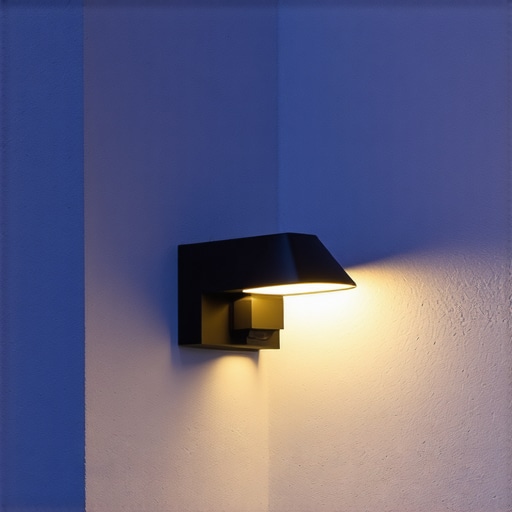
Modern outdoor lighting fixtures now transcend mere functionality, incorporating sleek, organic forms that complement natural surroundings. Adaptive LED fixtures equipped with integrated sensors embrace these design principles, utilizing outdoor LED technology capable of seamless dimming and color temperature adjustments. These fixtures, paired with intelligent sensor algorithms, facilitate layered lighting environments—evoking ambiance while maintaining precise activation zones, thus reducing unintended pet triggers and enhancing overall aesthetic harmony.
Leveraging IoT Ecosystems to Elevate Pet-Resistant Illumination Strategies
The integration of IoT platforms enables comprehensive control over outdoor lighting ecosystems, fostering remote customization and real-time monitoring. Smart hubs serve as central nodes, orchestrating data from a constellation of sensors and fixtures authenticated via secure protocols. This connectivity supports adaptive schedules, virtual geofencing, and user-defined detection sensitivities, ensuring lighting responds adeptly to changing household dynamics. Such systems, underpinned by modular hardware like compatibility-ready spare parts and robust transformers, promise resilience and scalability.
Future-Proofing Outdoor Lighting Against the Complexity of Pet and Human Interactions
As AI algorithms mature, the pursuit of near-zero false activation rates intensifies. Emerging models incorporate multi-modal data fusion, contextual learning, and continuous feedback mechanisms to adapt to unique household behaviors and pet activity cycles. While absolute certainty remains an aspirational goal, current trajectories suggest that smart lighting can achieve practical indistinguishability, greatly reducing user intervention and system fatigue. Exploring multi-layered detection strategies, such as combining layered wall and ground lighting, becomes pivotal in this effort.
Addressing Ethical and Privacy Challenges in AI-Driven Outdoor Surveillance
The deployment of advanced sensors and AI models necessitates careful consideration of privacy, data security, and ethical implications. End-users must be assured that movement data—encompassing pet activity—is encrypted, anonymized, and utilized transparently. Incorporating privacy-preserving techniques and clear consent models enhances trust, ensuring that technological progression does not compromise societal norms. Collaborative efforts among technologists, ethicists, and users are essential to establish standards that align innovation with responsible stewardship.
If you are invested in pioneering pet-friendly outdoor lighting solutions, engaging with multidisciplinary research and sharing your insights can accelerate the adoption of reliable, intelligent systems—leading to safer, smarter landscapes that respect the delicate balance between technology, privacy, and pet well-being.
Expert Insights & Advanced Considerations
Incorporate Multi-Sensor Technologies for Precise Detection
Integrating visual, infrared, and acoustic sensors enhances environmental awareness, enabling lighting systems to discriminate accurately between household pets and potential intruders, thereby reducing false triggers and optimizing energy use.
Prioritize Aesthetic-Functional Fusion in Fixture Design
Embrace sleek, organic forms paired with adaptive LED technology to create outdoor fixtures that are both visually appealing and highly responsive to household dynamics, elevating safety and ambiance simultaneously.
Leverage AI & Machine Learning for Continuous Optimization
Implement deep learning algorithms capable of analyzing movement signatures over time, allowing outdoor lighting systems to adapt intelligently, minimize false positives, and improve overall reliability in pet-rich environments.
Recognize the Role of IoT Ecosystems in Management
Develop centralized smart hubs that orchestrate sensor data, provide remote control, and facilitate virtual geofencing, enabling seamless integration of pet safety and security measures with user convenience.
Stay Ahead by Addressing Ethical and Privacy Aspects
Ensure that data collection and processing adhere to strict privacy standards through encryption, anonymization, and transparent user agreements, fostering trust and ethical integrity in smart outdoor lighting deployment.
Curated Expert Resources
- Energy and Buildings Journal 2022 – Offers comprehensive research on AI-driven sensor fusion and adaptive outdoor illumination technologies suitable for pet-sensitive applications.
- Orion Rasvjeta Design Trends 2025-2026 – Provides insights into contemporary fixture aesthetics, organic form integrations, and innovative LED solutions aligned with expert hardware recommendations.
- Smart Home Automation Articles by Industry Leaders – Present best practices for integrating IoT management hubs, virtual geofencing, and automation workflows that optimize pet safety without sacrificing aesthetic appeal.
Expert Perspective on the Future of Outdoor Pet-Friendly Lighting
As the landscape of outdoor illumination advances, engineers and behavioral scientists alike recognize that fusing multi-sensor technology, AI learning models, and ethical data practices forms the cornerstone of truly reliable pet-resistant systems. The ongoing challenge remains: how can smart lighting adapt seamlessly to household variability while maintaining high security standards? The answer lies in continuous innovation, rigorous testing, and active engagement with industry standards. If you’re committed to pushing these boundaries, consider sharing your insights or collaborating through professional forums, and stay informed about upcoming breakthroughs by exploring resources such as modern visilice and viseće svjetiljke.