
Advancing Interior Lighting through External Motion Sensor Integration
In the evolving landscape of smart illumination, the seamless integration of external motion sensors into existing indoor lighting infrastructure exemplifies the convergence of efficiency, user experience, and contemporary design principles. This practice not only optimizes energy consumption but also aligns with human-centric lighting approaches, emphasizing well-being and adaptive environments. Understanding the technical nuances and strategic benefits of such integration is essential for lighting professionals aiming to craft harmonious and intelligent interior spaces.
Technical Considerations for Reliable Sensor Integration and E14 Compatibility
Implementing external motion sensors necessitates meticulous attention to compatibility with existing fixtures, notably those utilizing E14 lamp bases. Ensuring voltage and wiring compatibility is paramount, alongside selecting sensors with appropriate detection ranges and adjustable settings to minimize false activation. Furthermore, integrating sensors with dimming capabilities enhances flexibility, facilitating dynamic ambiance creation that responds to occupancy patterns and natural light fluctuations.
Harnessing Human-Centric Lighting to Elevate Spatial Comfort
Incorporating human-centric principles involves calibrating sensor-assisted lighting to deliver optimal luminance levels tailored to specific activities and circadian considerations. This approach ensures that lighting adapts not just for visibility but to support health and productivity, especially in office environments or creative studios. Precise sensor placement and programming are critical to achieve uniform coverage, prevent glare, and sustain a balanced aesthetic that complements minimalist or industrial interior styles.
Creating Adaptive Outdoor-Indoor Transitions with Vanjske Stropne Svjetiljke
Expanding the scope beyond interior spaces, integrating outdoor vanjske stropne svjetiljke equipped with motion sensors facilitates secure and effortless access. Strategic placement along pathways and entry points, coupled with weather-resistant features, enhances both safety and visual appeal. Such systems contribute to a cohesive lighting narrative, bridging aesthetic continuity and functional security, vital for properties embracing modern industrial or rustic design themes.
Expert Tips for Safe and Effective Installation of Human-Centric Rasvjeta
Professional installers recommend meticulous testing of sensor sensitivity settings to balance responsiveness with energy efficiency. Ensuring compliance with electrical standards, particularly when modifying fixed wiring in older structures, is imperative. Additionally, leveraging smart control systems can synchronize multiple units, enabling complex scenes and schedules that reflect occupancy and daylight integration, thus transforming ordinary spaces into dynamic, health-conscious environments.
What are the latest innovations in sensor technology that enhance the reliability of human-centric decor lighting?
Staying abreast of advancements in PIR and microwave sensors, along with smart analytics integrating AI, can significantly improve detection accuracy and adaptive responsiveness. Exploring emerging sensor fusion techniques allows for enhanced precision, reducing false triggers and optimizing user comfort. For further insight, see the comprehensive review by ResearchGate’s assessment of sensor innovations.
To achieve truly intelligent lighting environments, collaboration with lighting design experts and integration of control systems tailored to specific use cases are crucial. Consider exploring our detailed guide on [Kombinovanje zidnih i podnih lampi za savršen ambijent](https://orionrasvjeta.me/kombinovanje-zidnih-i-podnih-lampi-za-savrsen-ambijent), which offers insights into complementary lighting solutions that can be synchronized with sensor-based automation.
Reimagining Comfort: Mastering Ambiance with Layered Lighting
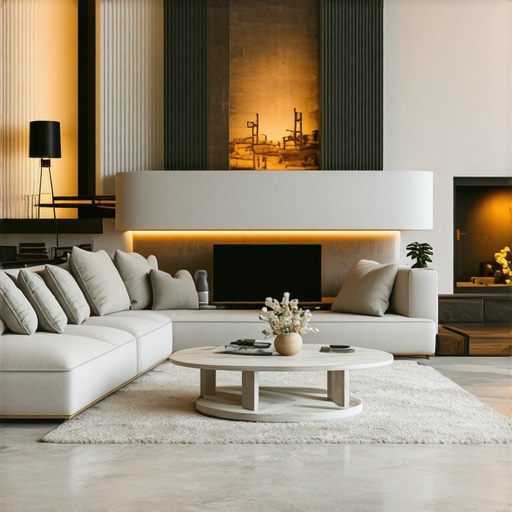
Creating captivating interior spaces demands more than just selecting the right fixtures; it involves orchestrating a symphony of lighting layers that adapt seamlessly to mood, function, and time of day. Incorporating multiple lighting techniques—such as accent, task, and ambient lighting—enables designers and homeowners to craft dynamic atmospheres that enhance spatial perception and emotional resonance. Exploring how to harmonize these layers offers a pathway to truly personalized environments, elevating everyday living into an art form.
Strategic Placement and Control for Dynamic Atmospheres
Achieving versatile lighting scenarios hinges on meticulous placement of fixtures and advanced control systems. For instance, wall-mounted spotlights can highlight architectural features, while concealed LED strips add subtle glow, all controllable via smart systems that respond to occupancy or circadian rhythms. Integrating solutions like [dimmers and scene selectors](https://orionrasvjeta.me/kako-odabrati-pravi-led-osvetljenje-za-vas-dom) allows for quick transformation of a space from energizing to relaxing, ensuring functionality aligns with aesthetic intent.
Why Does Color Temperature Influence Mood and Productivity?
Color temperature plays a pivotal role in how spaces are perceived and utilized. Cooler temperatures (~5000K) promote alertness, making them suitable for work areas, while warmer tones (~2700K-3000K) foster relaxation, perfect for lounges and bedrooms. Thoughtful adjustment of color temperature across different zones, possibly automated through smart controls, enhances well-being and supports healthy circadian patterns. For an in-depth understanding, see our guide on [Kako odabrati pravu boju svjetla za svaki prostor](https://orionrasvjeta.me/kako-odabrati-pravi-led-osvetljenje-za-vas-dom).
Can customization technologies redefine individual comfort in shared living spaces?
Emerging innovations in tunable white LED systems and app-controlled lighting solutions unlock unparalleled personalization. These technologies enable users to fine-tune brightness and color warmth instantly, responding to personal preferences or activity-specific needs. As the industry advances, integrating voice control and AI-driven adjustments becomes increasingly feasible, setting new standards for comfort and energy efficiency. To explore cutting-edge tools, consider our article on [Moderne lampe za dnevni boravak — Inspiracija i saveti](https://orionrasvjeta.me/moderne-lampe-za-dnevni-boravak-inspiracija-i-saveti), which highlights how smart lighting can adapt to your lifestyle.
For those eager to elevate their space, collaborating with lighting experts and leveraging integrative control platforms will unlock the full potential of ambient customization, transforming ordinary rooms into personalized sanctuaries of light and shadow.
Maximizing Sensor Precision: The Art of Fine-Tuning Detection Zones
Achieving impeccable accuracy in motion detection involves a nuanced approach to sensor calibration, considering factors like environmental lighting, ambient temperature fluctuations, and object movement patterns. Advanced sensors equipped with configurable sensitivity settings allow installers to tailor detection zones precisely, reducing false triggers caused by minor movements or exterior influences such as wind or wildlife. Employing a combination of PIR (Passive Infrared) and ultrasonic technologies can also compensate for varying environmental conditions, ensuring consistent activation and deactivation of lighting systems.
Innovative Sensor Fusion: Blending Data Streams for Intelligent Response
Emerging advancements in sensor fusion—integrating data from multiple sources—are transforming the landscape of human-centric lighting control. For example, combining PIR sensors with ambient light sensors and even acoustic detection can create a holistic awareness of the environment, enabling the system to adapt in real-time with remarkable precision. This multi-sensor approach not only enhances reliability but also reduces energy wastage, as lighting responds solely to genuine occupancy and activity levels. For an in-depth technical overview, see IEEE’s comprehensive study on sensor fusion applications.
How do smart algorithms further refine sensor responsiveness in complex environments?
Incorporating machine learning algorithms enables sensor systems to recognize patterns over time, dynamically adjusting sensitivity based on historical occupancy behavior. These adaptive algorithms can differentiate between transient movements and sustained presence, optimizing energy use without compromising user comfort. The deployment of AI-driven sensors heralds a new era where lighting systems learn and evolve, offering personalized and anticipatory illumination environments that align with occupant routines. For cutting-edge insights, explore the paper on AI-enhanced sensor systems in smart buildings.
Customizable Color and Brightness Dynamics through Sensor Data
Leveraging sensor inputs extends beyond mere occupancy detection; it opens avenues for dynamic control of color temperature and luminance, fostering environments tailored to specific tasks or moods. For instance, sensors can monitor natural daylight ingress and adjust artificial lighting accordingly, maintaining consistent light levels while respecting circadian rhythms. This synergy between sensors and intelligent controls supports the concept of active daylight harvesting, reducing reliance on static lighting schemes and promoting energy efficiency. To see practical implementations, review case studies in the Lighting Research Center’s recent publications.
Future Horizons: Sensor Technologies Redefining Human-Centric Illumination
Looking forward, the integration of predictive analytics and contextual awareness promises to revolutionize lighting control. Sensors equipped with voice recognition, facial expression analysis, and environmental sensing could inform real-time adjustments that align with individual needs, preferences, and even emotional states. Imagine a system that recognizes your shift in mood and subtly alters lighting ambiance to enhance comfort or focus—all driven by sophisticated sensor networks and AI algorithms. For designers and end-users eager to stay ahead of these trends, exploring IoT platforms that support scalable sensor integration is crucial. Dive deeper into emerging innovations with resources like IoT Business News’s analysis on smart sensor ecosystems.
Engage with experts and technology providers to craft tailored solutions that elevate human-centric environments into truly intelligent spaces where every photon serves a purpose—delivering comfort, efficiency, and style simultaneously.
Najnoviji trendovi u integraciji senzorskih tehnologija za optimalnu kontrolu rasvjete
Napredak u senzorskoj tehnologiji dovodi do sofisticiranijih sustava koji omogućavaju preciznije i pouzdanije reagiranje na pokrete i promjene okoliša. Uključivanje višesenzorskih fusion tehnologija, poput kombinacije PIR i ultrazvučnih senzora, omogućava sustavima da bolje razlikuju međuobjekte i aktivnosti, minimizirajući lažne uzbune. Ove inovacije rezultiraju energetski učinkovitijim rješenjima koja se prilagođavaju potrebama prostora, istovremeno održavajući visoku razinu korisničkog udobnosti.
Koristeći vrhunski stručni savjet za optimalne rezultate
Integracija senzora u unutarnju rasvjetu omogućava drastično povećanje učinkovitosti i personalizacije prostora. Precizno postavljanje senzora s naprednim algoritmima može osigurati precizno detektiranje pokreta, smanjujući lažne alarme i povećavajući sigurnost i uštedu energije. Usvajanje najnovijih tehnologija poput senzorskog fuse i AI analitike otvara vrata za adaptivne sustave koji uče i optimiziraju se prema životnim rutinama korisnika.
Resursi koji nadilaze osnovno znanje
– Najsuvremenije inovacije u senzorskoj tehnologiji pružaju uvide u najnovije trendove i tehnička rješenja.
– Vodiči o kontroli i automatizaciji rasvjete nude praktične primjene i preporuke za profesionalce.
– Simulacijski softver za dizajn rasvjete omogućava modeliranje i optimizaciju sustava prije implementacije.
Kada se svjetlo susreće s inteligencijom, krajne mogućnosti se otvaraju
Uvođenjem senzorske fusion tehnologije i AI analze u sustave unutarnje i vanjske rasvjete, profesionalci mogu dizajnirati prostore koji intuitivno odgovaraju na potrebe i želje korisnika, čineći svijet sbijenim, energetski učinkovitijim i estetski sofisticiranijim. Ove tehnologije pružaju platformu za razvoj personaliziranih ambienta, sigurnosti i održivosti, oblikujući budućnost gdje svjetlo postaje živo sučelje između čovjeka i tehnologije.